Narrator and Newton’s relationship
The HumansThe relationship between the Alien narrator and Newton, the Martin family’s elderly dog, begins as a problem of trust and becomes an unlikely form of companionship. Newton appears to recognize that the narrator is not the person he seems to be; the narrator, unable to understand the dog’s language, first treats that recognition as a possible source of useful information. But an attempt to win Newton over by relieving his suffering develops into care, shared routines, and a confession that the narrator cannot make to the humans around him.
First Encounter and Uneasy Recognition
The narrator meets Newton while alone the day after Daniel Russell’s death. Newton is old, hobbles, and is half-blind. His name, the narrator observes, honors the human associated with gravity and inertia; the dog’s slow movement makes the name seem apt. This description places their relationship in the narrator’s habit of interpreting human and animal life through unfamiliar, analytical terms, even as Newton’s response unsettles that habit.
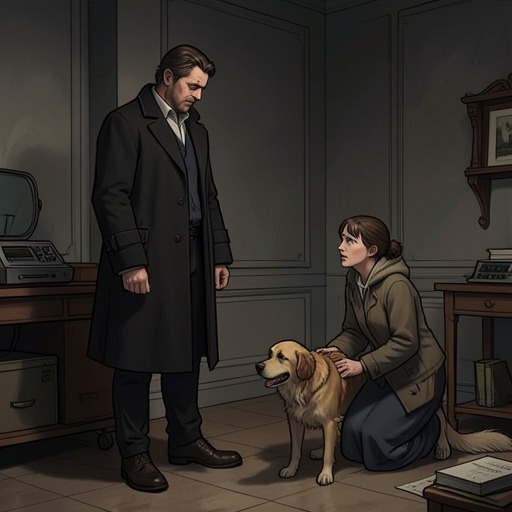
Newton growls and shows his teeth whenever the narrator is near. The narrator cannot translate the dog’s sounds, but understands them as displeasure. He also recognizes that Newton seems to know who he is—or, more precisely, who he is not. To the narrator, the dog’s hostility suggests a sensitivity to the difference between the intruder and the person he has replaced, sharper in this respect than the humans’ perception. That interpretation matters to the narrator, though the dog’s inner understanding remains unknowable: Newton never explains what he senses.
Care Begins as Strategy
The narrator initially approaches Newton with practical aims. His stay will be easier if the dog is on his side, he reasons, because Newton might have gathered information or noticed signals. The narrator’s proposed means of gaining loyalty is to relieve the dog’s pain. He gives Newton a biscuit, then uses his abilities to restore the dog’s sight and heal him. The act leaves the narrator with a more intense headache and waves of fatigue; exhausted, he falls asleep on the kitchen floor.
The healing is both calculated and emotionally revealing. The narrator admits to himself that, alongside an urge to hurt, he has begun to feel an urge to heal. He initially frames helping Newton as a way to secure cooperation, but the physical cost of the act and the care that follows make the exchange more than a transaction. When he wakes, Newton is persistently affectionate. The narrator asks him to stop, but Newton cannot disengage until the narrator stands. The attention that the narrator had sought to manage becomes its own challenge: he is no longer simply trying to enlist the dog but must decide how to respond to being wanted.
From Company to Attachment
Newton stays beside the narrator through the day. At one point he repeatedly places his head on the narrator’s lap, lifts it, and puts it back, as if uncertain whether to settle there. The small, repeated gesture gives their growing closeness a tentative quality. The narrator can recognize the dog’s attachment without being able to explain it, and later discovers that stroking him—the warmth and rhythm of the movement—feels pleasant.
Their companionship also interrupts the narrator’s plans. He wants to concentrate on when to act next and how much information he needs before carrying out his intended final acts against Andrew Martin’s wife and child. When he tells Newton to leave him alone, the dog obeys. Yet once left with his thoughts, the narrator feels terrible loneliness and calls Newton back. Newton returns, apparently happy to be wanted again. This turn exposes a need the narrator had not planned for: the dog is not only a possible source of intelligence but company the narrator actively seeks when isolation becomes difficult.
Shared Pleasures and a Confession
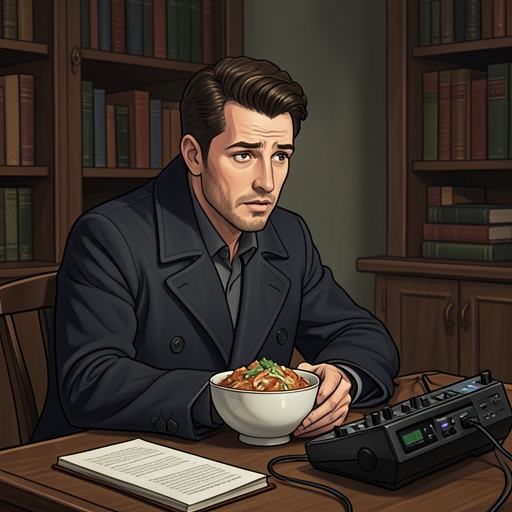
Food and music extend their companionship into ordinary domestic life. The narrator tests unfamiliar foods, eventually choosing crunchy wholenut peanut butter on bread and sharing it with Newton, who likes it. He makes more for them both. The narrator connects the pleasure of eating with pleasures he had not previously known, including music and the simple company of the dog. Newton is present not merely as the recipient of care but as a participant in these small discoveries.
The narrator also confides in Newton. He tells the dog that he is not what he appears to be and links Newton’s early growling to the dog’s sense that something was different. He then admits that he has killed someone and considers how humans would judge him, while maintaining that his actions were meant to save something. The confession brings him relief. Newton’s silence gives the narrator room to speak, but the scene does not establish that the dog comprehends the explanation; their communication remains divided between the narrator’s speech and Newton’s untranslatable responses.
The Relationship’s Significance
Newton’s place in the narrator’s life changes the meaning of his early plan to win the dog over. What begins as an instrumental calculation—gain trust, perhaps gain information—becomes a relationship marked by care, dependence, and the narrator’s admission of loneliness. Newton’s recognition of the imposture also gives the narrator a witness to the difference he conceals from the Martin family, even though the dog cannot confirm what he knows.
The bond remains asymmetrical but not simply one-sided. The narrator heals and feeds Newton, interprets his behavior, and calls him back; Newton offers persistent company and accepts the narrator’s attention. Their shared routines do not erase the narrator’s guilt or his plans, but they complicate his effort to regard Earth’s inhabitants only as a species defined by violence. In the dog’s presence, the narrator encounters attachment not as an abstract idea but as an insistent, everyday relation he first resists and then chooses to continue.